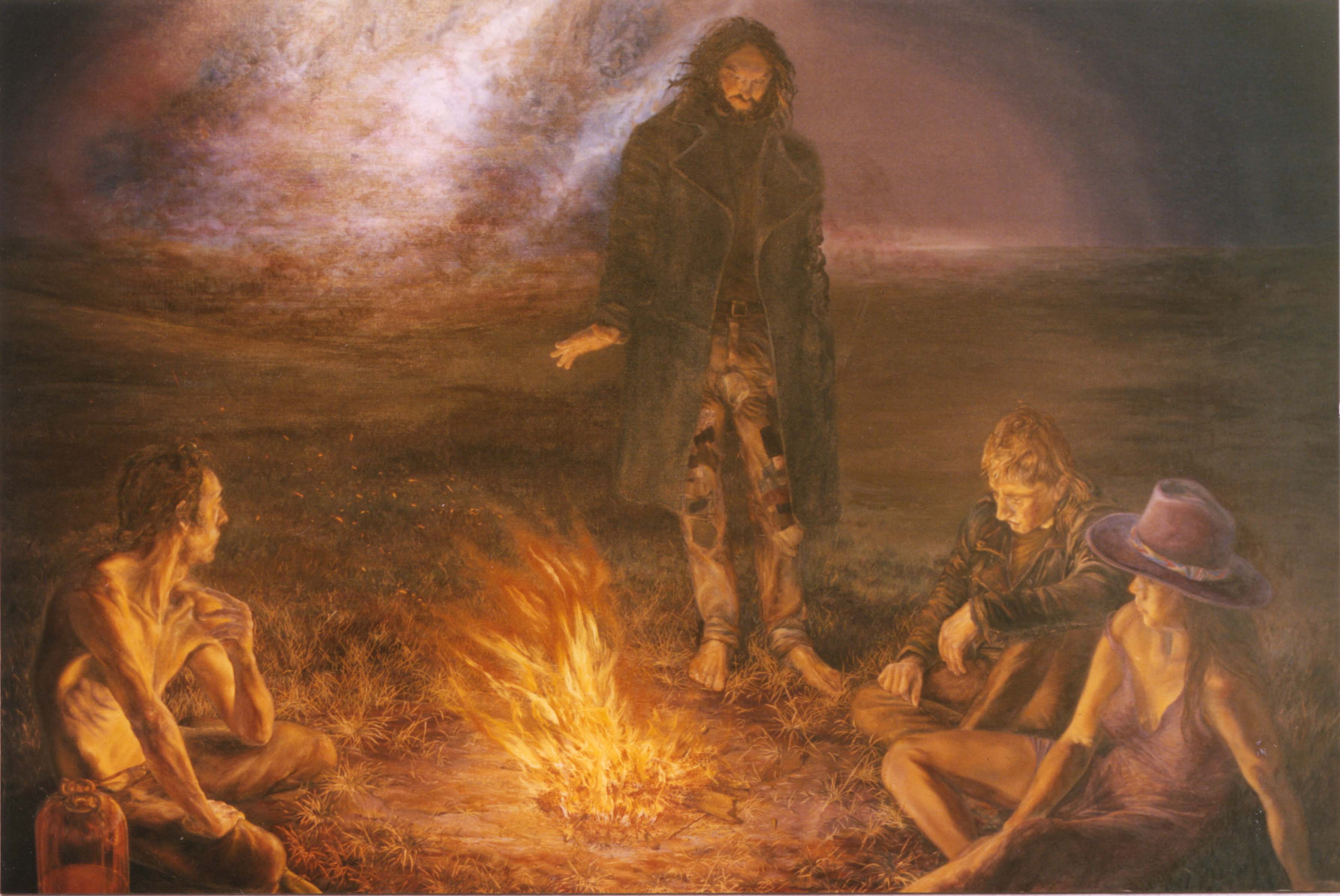
An apocalyptic vision, remembered from a dream. A group of revellers/brigands/survivors are witness to the electric frozen moment when the silos are opened and nuclear weapons are launched.
This picture was painted at the height of the cold war.
An apocalyptic vision, remembered from a dream. A group of revellers/brigands/survivors are witness to the electric frozen moment when the silos are opened and nuclear weapons are launched.
This picture was painted at the height of the cold war.
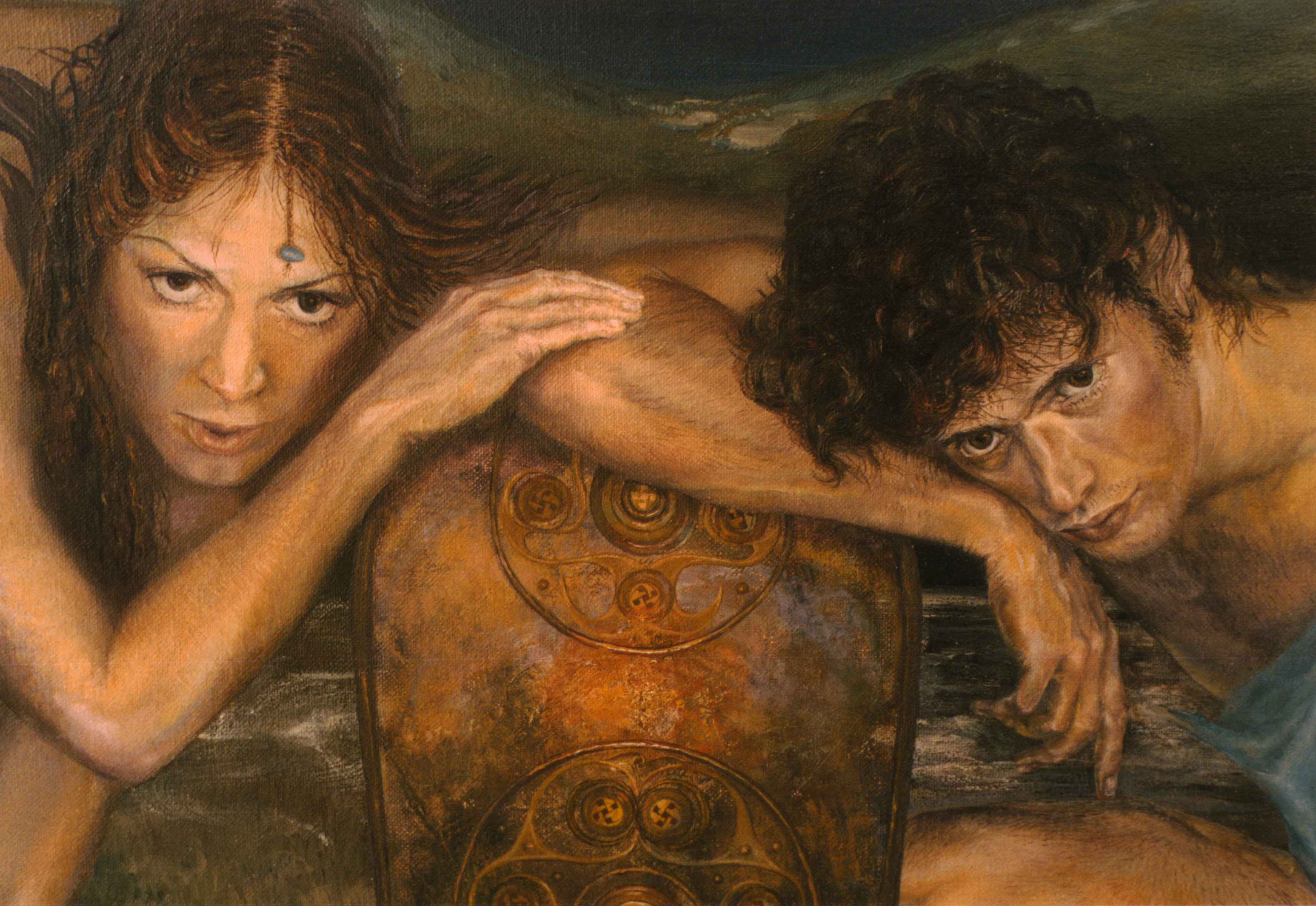
A couple watch rapt as the sun rises; seen reflected in the 1st century b.c. Battersea shield; a wonderful example of Celtic bronze work, dredged from the river Thames, and now in the British museum, London.
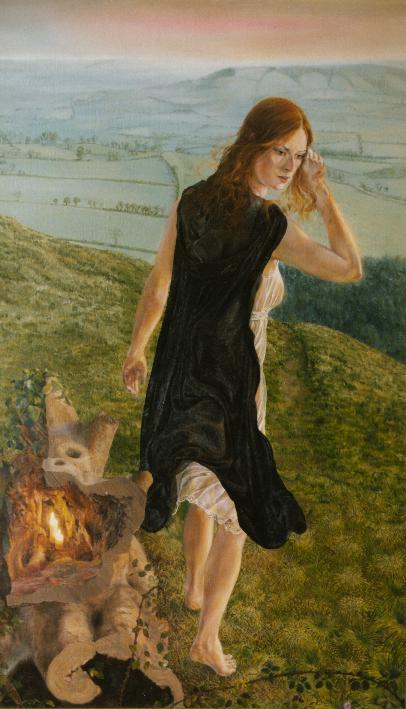
Freyja was a fertility goddess in ancient Norse mythology. Her husband Od disappeared and she was said to weep tears of red gold for him. As she travelled on her annual harvest ritual, she left lights burning to guide him back to her.
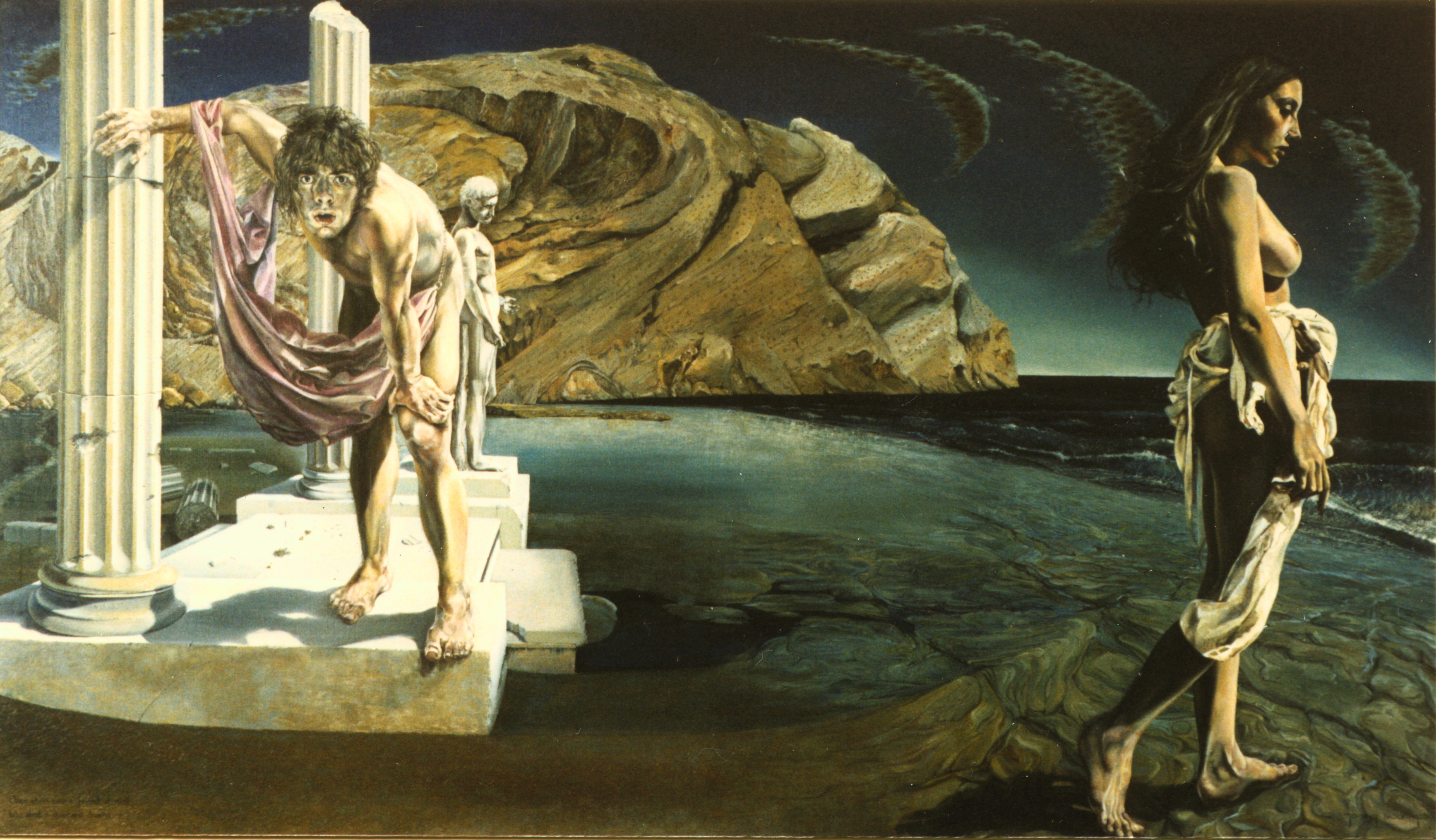
Relating to the tableau of Christ (main figure) and Barabus. Pilate asks the crowd to choose one to go free and they call for Barabus (the man of stone). Nike, the godess of victory, is departing, and Christ is hounded from this world, to die countless times, for us all, throughout history.
The scene is set on the Greek island of Thira; the elliptical forms of an immense slab of rock, concentric upon Christ’s head, sound the reverberations of the moment.
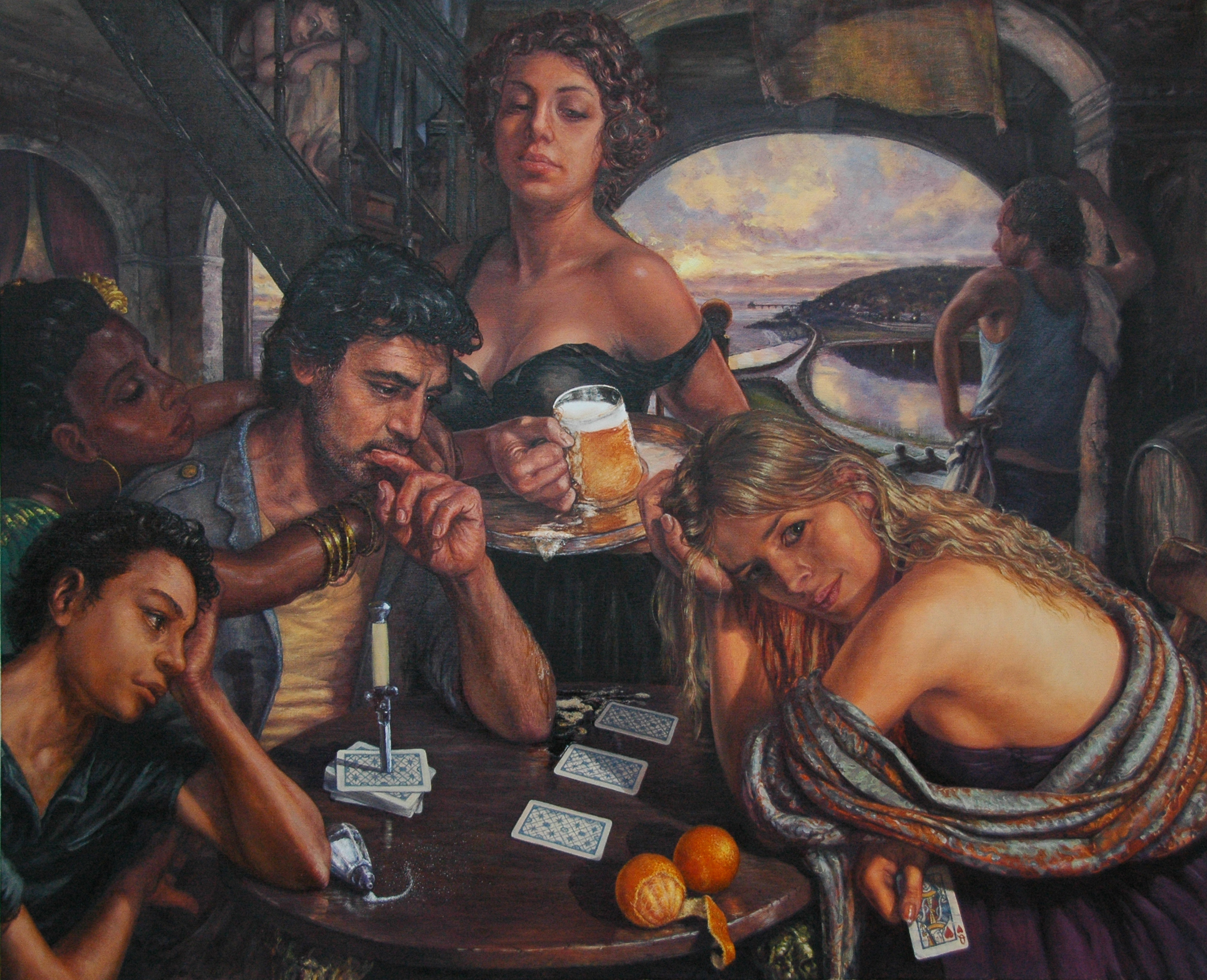
A game of cards.
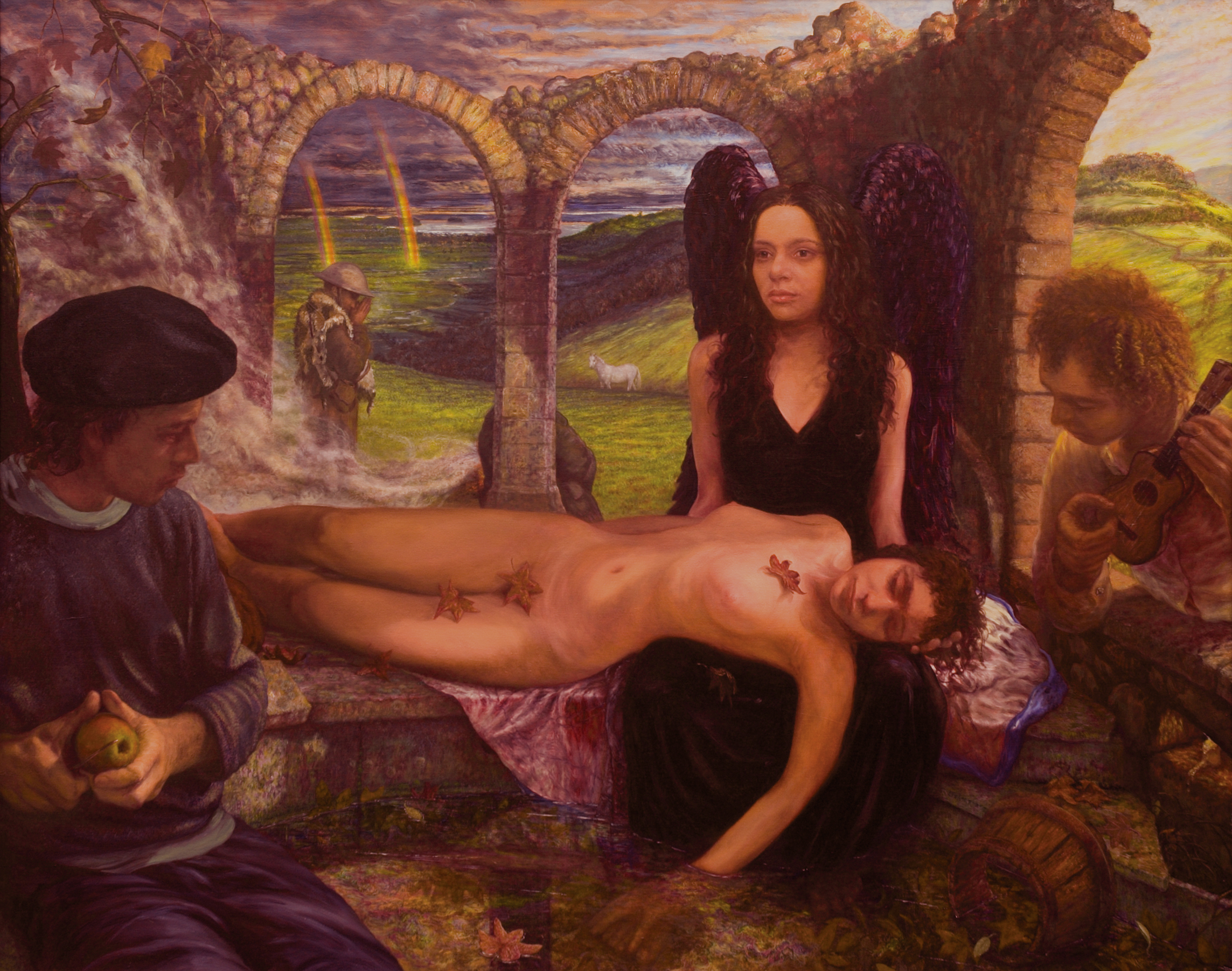
An allegory of war. The tyranny of brute force and the rape of innocence.
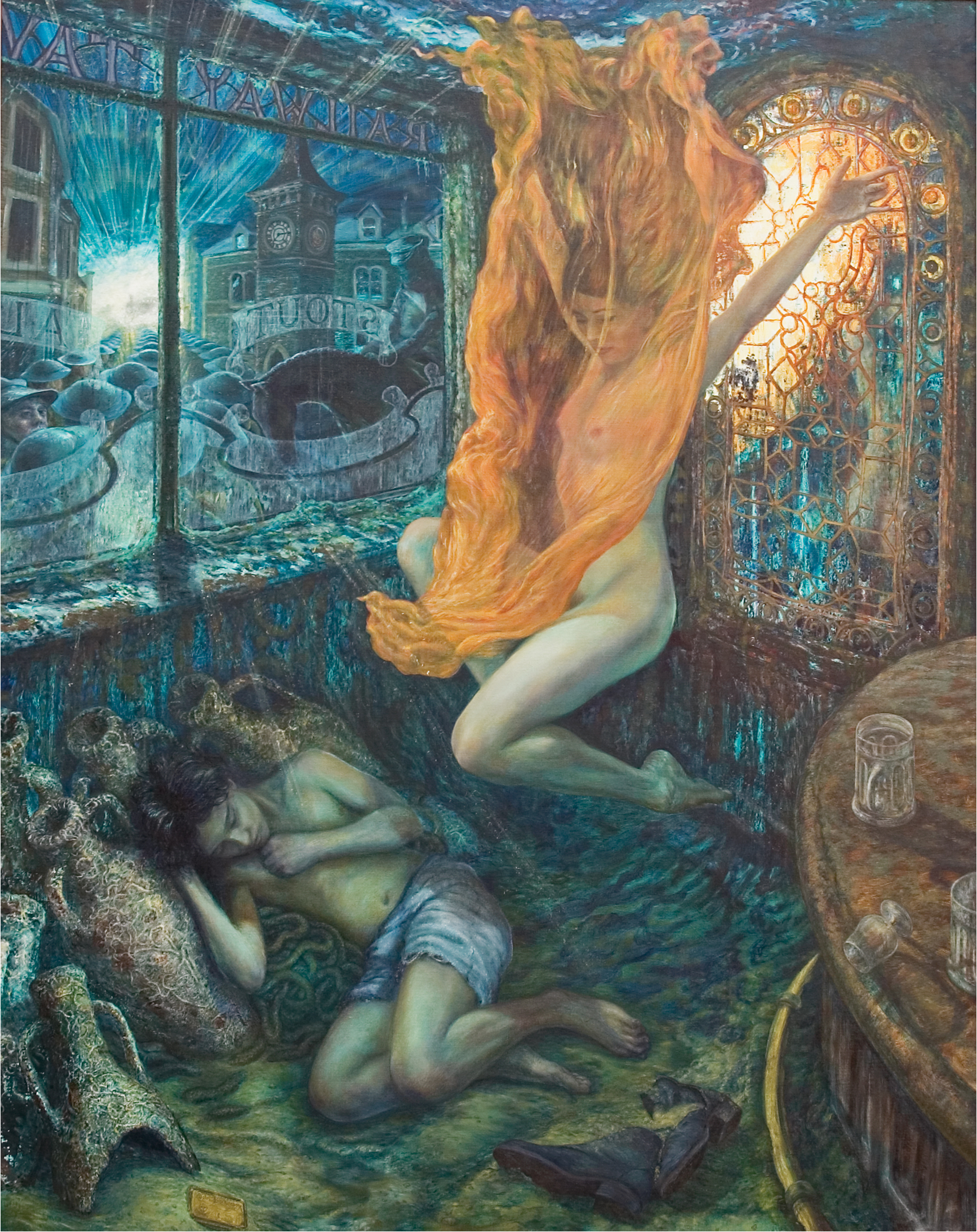
There is a lot, in fact a wealth, of background research etc, to this painting. These notes refer to the finished work in the way that you might describe an iceberg from the deck of a passing ship. There are so many elements of Eliot’s poem informing the picture that I proudly associate the two.
The sleeping boy, dozing in the sun on some Phoenician trading vessel, resting against the amphorae that will be found all across the seabeds of Europe, is also the transitive soul of one of the Soldiers, newly killed in Flanders field, who marched past the window on their way to war.
The female figure is the immaculate and personal consolation, descending to comfort the boy/man.
The setting for this encounter is the Railway tavern, (latterly the Clock tower) in Clevedon’s Triangle, submerged under water (as is the whole environment) and being subsumed by undersea decay.
The amphorae were drawn from some beautiful examples in the museum at Rosas in northern Spain; the spirallae of sea-worms on their encrusted surfaces showing that they and the boy exist both here and three thousand years ago – today’s archaeology was once a lazy summer evening. Amphorae ‘ghost ships’ are regularly found; the jars stacked just as they were that day, filling the outline of the now vanished hull.
The mirror and the shoes are both from the wreck of the Titanic (the shoes from a nearby debris field). These artifacts are filled with pathos for me; the mirror once reflected scenes of gaiety and exuberant life (as it would in a pub) and the shoes are the only discernible trace of the engram of a human being who dissolved away, like Plebus in Eliot’s poem, who’s ‘bones were picked in whispers’.
The scene is inspired by a photo in Jane Lillly’s book – ‘Clevedon in old photographs’ showing a WWI regiment marching round this very corner in 1915, the scene is virtually unchanged today.
The one Soldier looks out at us…this is our way IN. The glasses on the bar tell the same tale as the shoes; they carry the ghost of that last drink, that last person. I imagine the soldiers have just finished a rest stop and a hurried pint before boarding the train glimpsed beyond. The pub exists both in their moment – and forever, flooded by eternity.
The brass snuff box is a real tingle. As I was nearing completing the picture, this box appeared one evening on TV’s Antiques roadshow. As the camera zoomed in, I couldn’t believe my eyes…the box was owned by a WWI soldier named John Brockington, who had decorated it by inscribing his name and some designs on the lid. No question: this would have found its way into the silt of my painting and would serve as a signature for the work.
Incidentally – from Bob Dylan’s song ‘Desolation Row’ (I was not consciously aware of this grouping of the same themes, despite many listens to this song):
Praise be to Nero’s Neptune
The Titanic sails at dawn
And everybody’s shouting
“Which Side Are You On?”
And Ezra Pound and T. S. Eliot
Fighting in the captain’s tower
While calypso singers laugh at them
And fishermen hold flowers
Between the windows of the sea
Where lovely mermaids flow
And nobody has to think too much
About Desolation Row
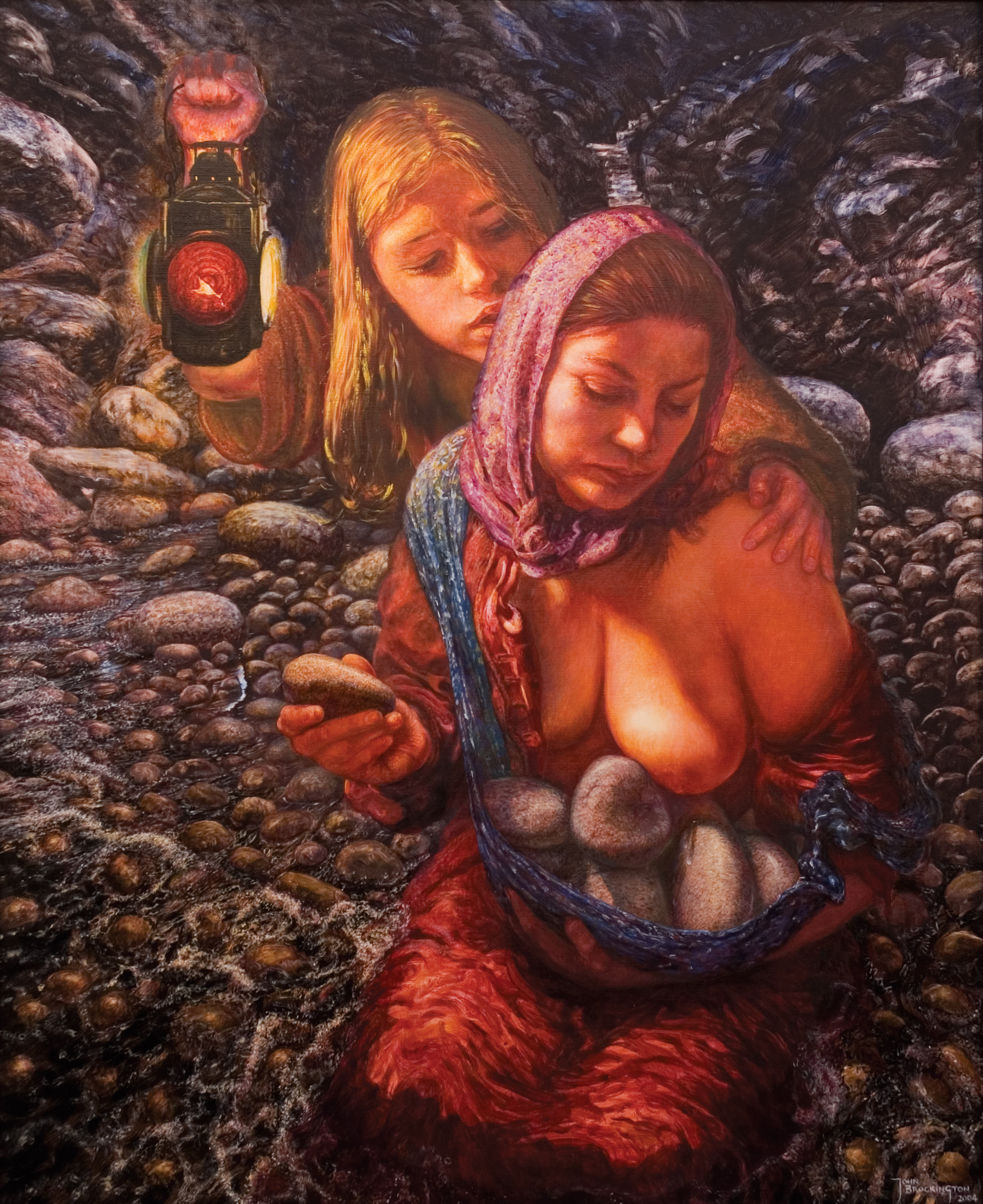
Inspired by the book ‘Fugitive pieces’ by Anne Michaels.
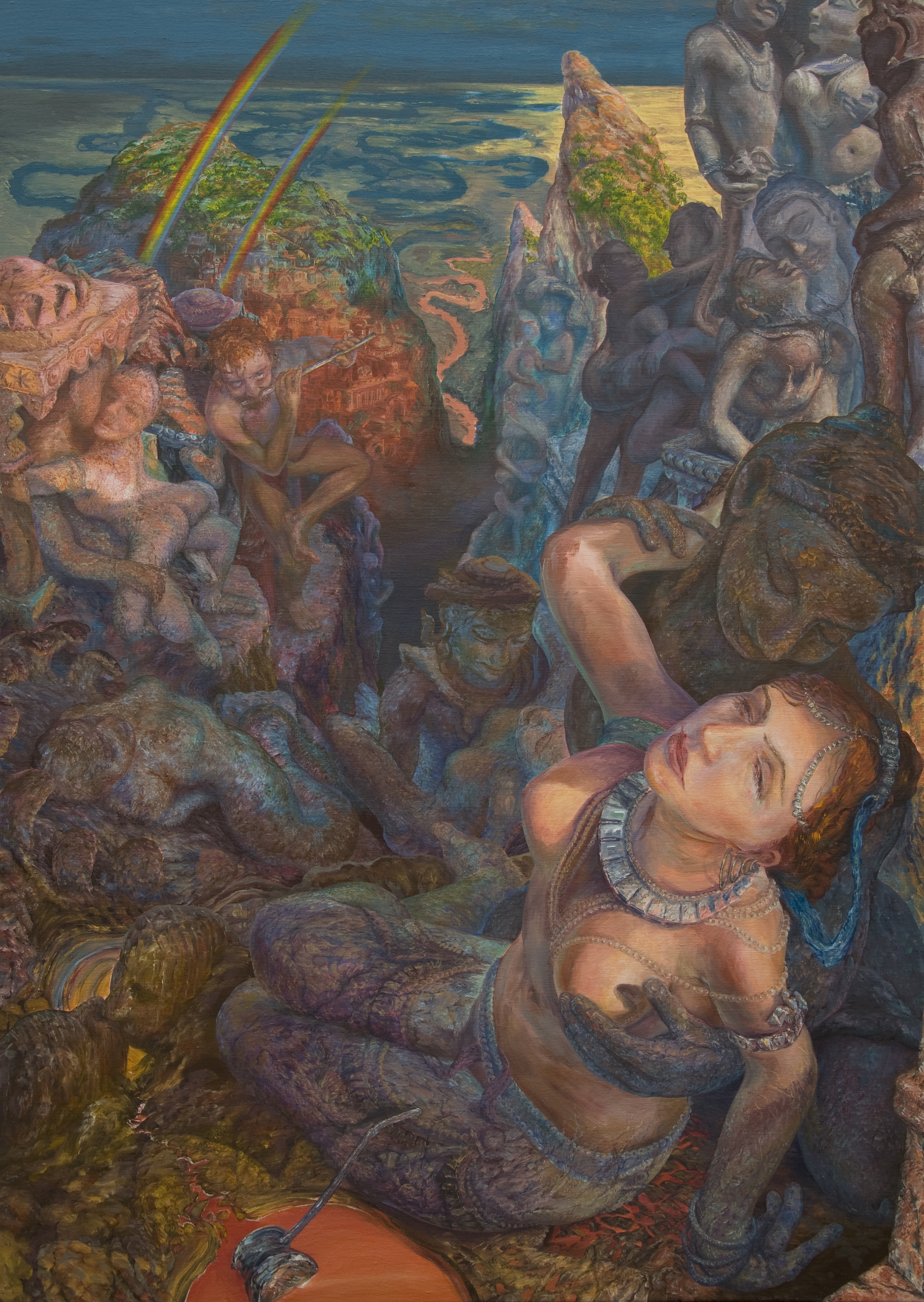
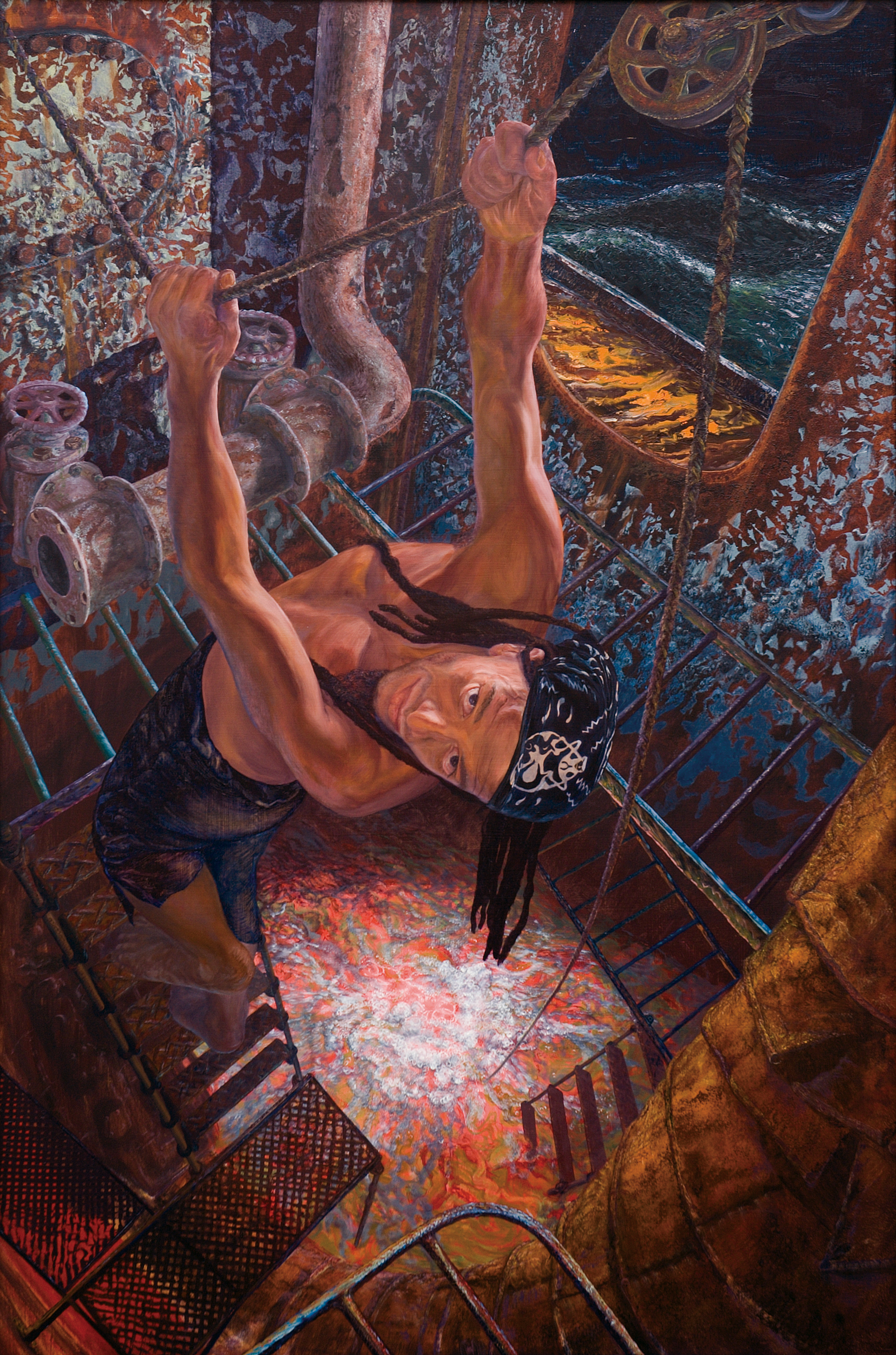
Sail, and for my sake never look back, said the looking land. Sails drank the wind and white as milk he sped into the drinking dark. The sun shipwrecked west on a pearl and the moon swam out of its hulk, funnels and mast went by in a whirl.
Goodbye to the man on the sea-legged deck, To the gold gut that sings on his reel, to the bait that stalked out of the sack, For we saw him throw to the swift flood a girl alive with his hooks through her lips. All the fishes were rayed in blood, said the dwindling ships.
And nothing shone on the water’s face But the oil and bubble of the moon. Plunging and piercing in his course, the lured fish under the foam, Witnessed with a kiss.
From “Ballad of the Long” by Dylan Thomas (extract)