Hi and welcome to my new website which has been rebuilt for me from the ground up by my son Roy, to whom I am very grateful indeed.
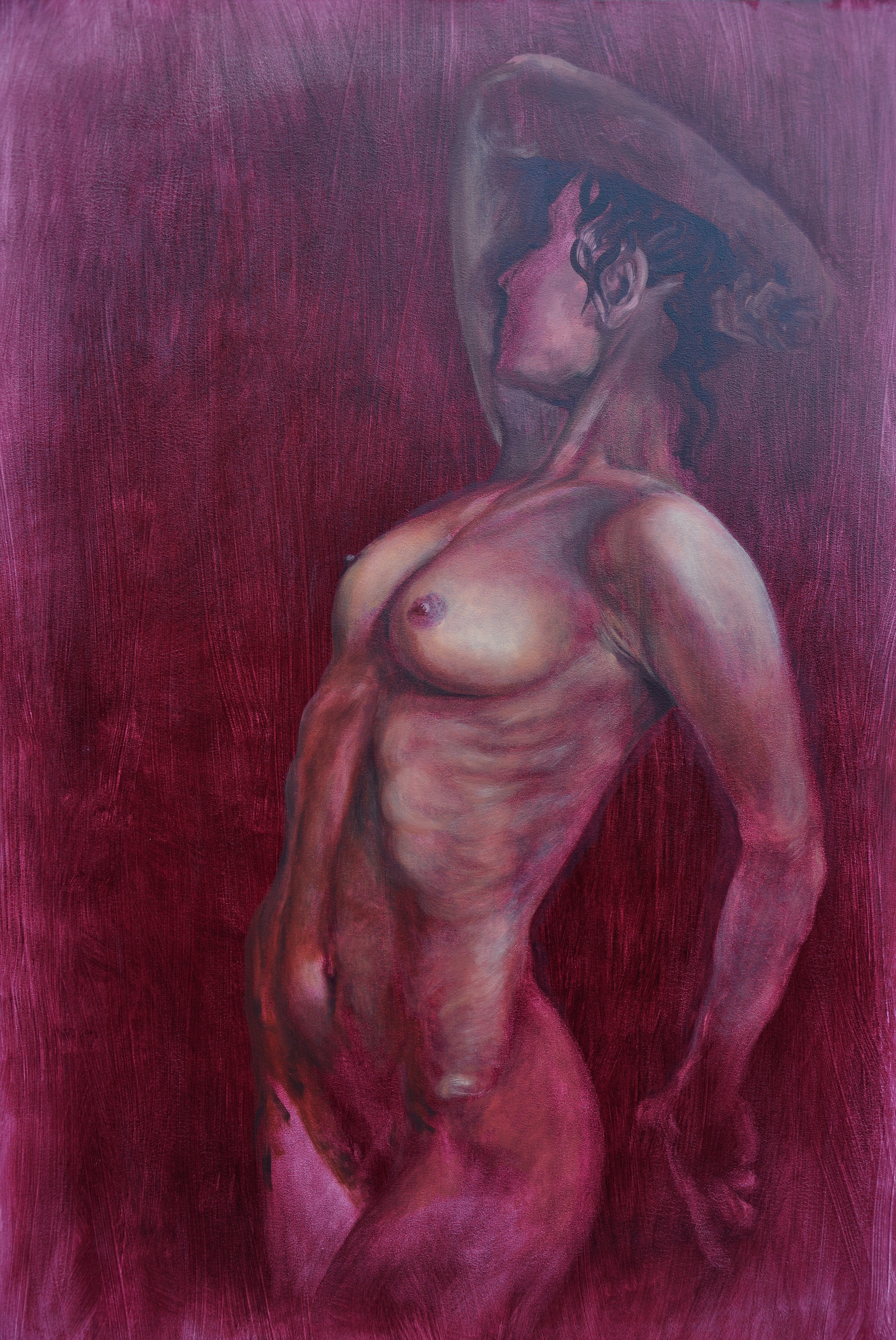
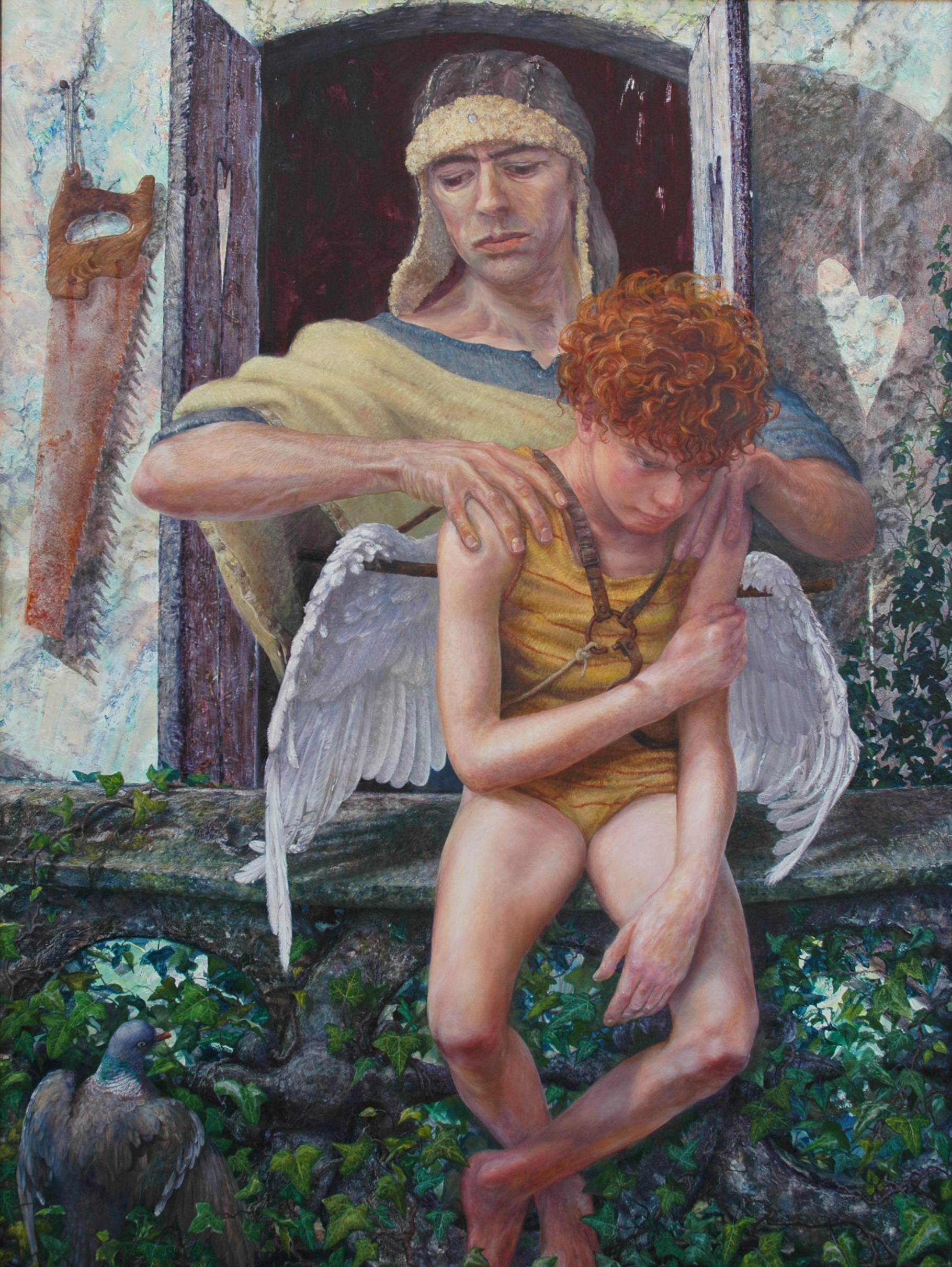
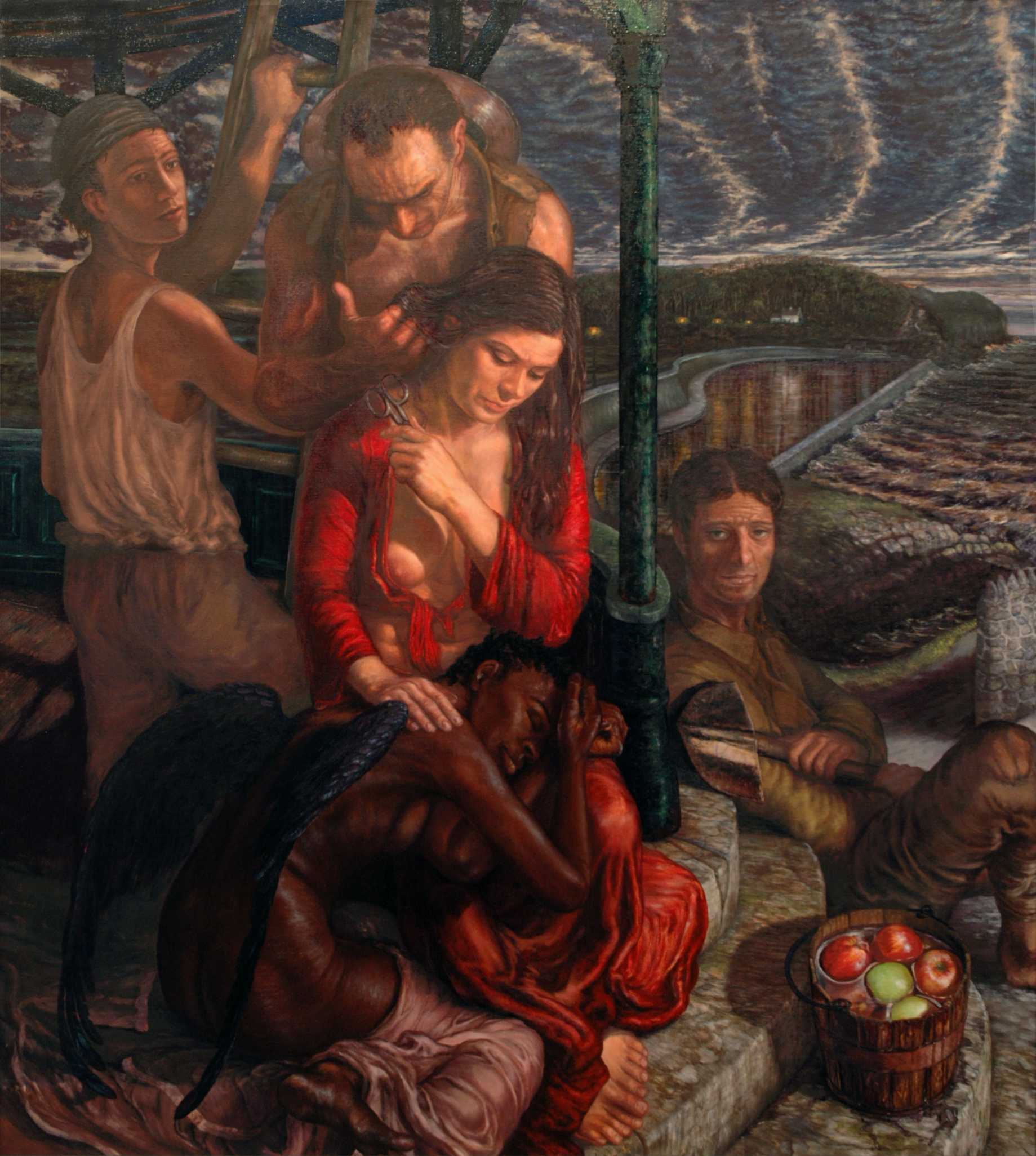
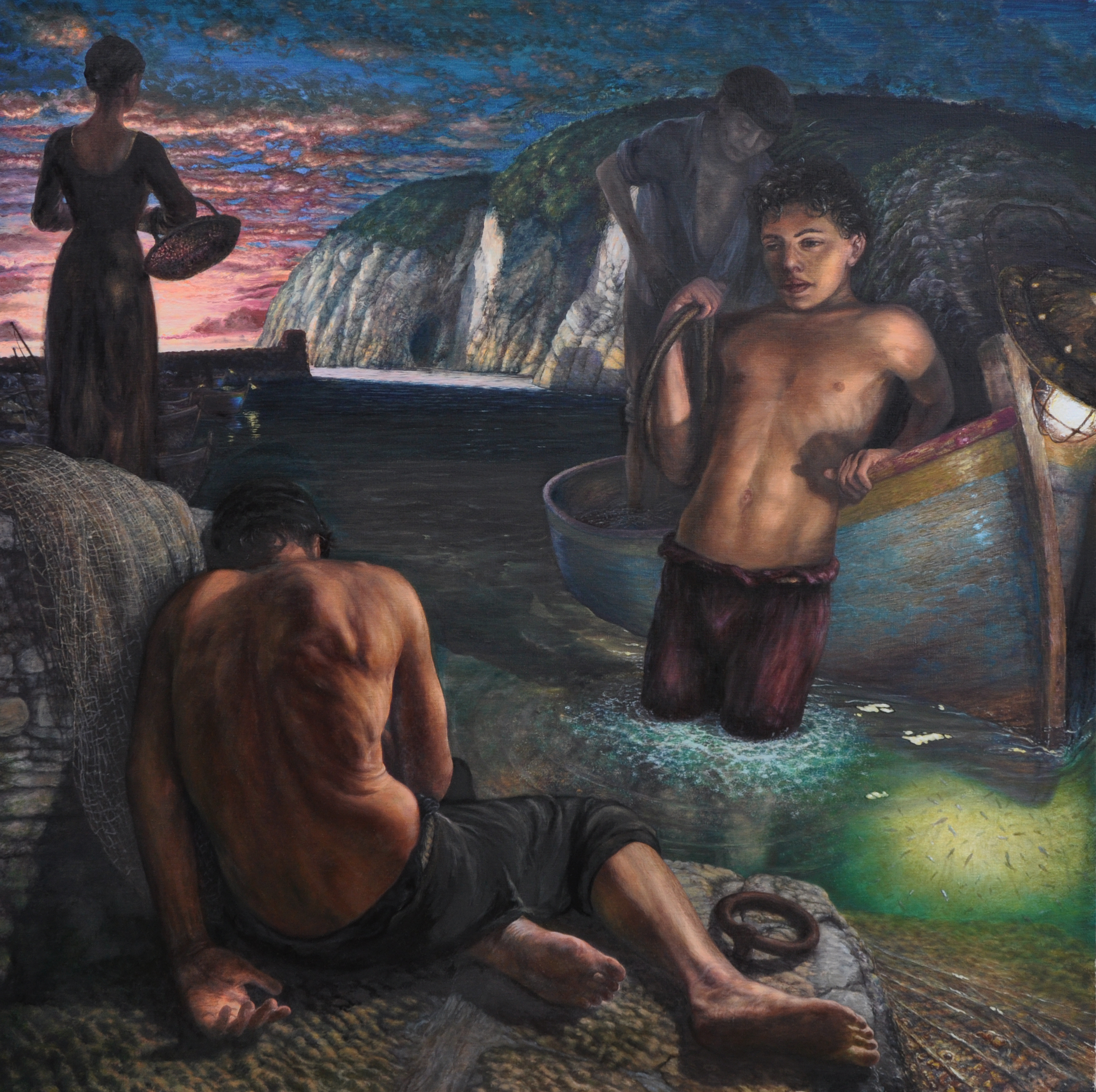
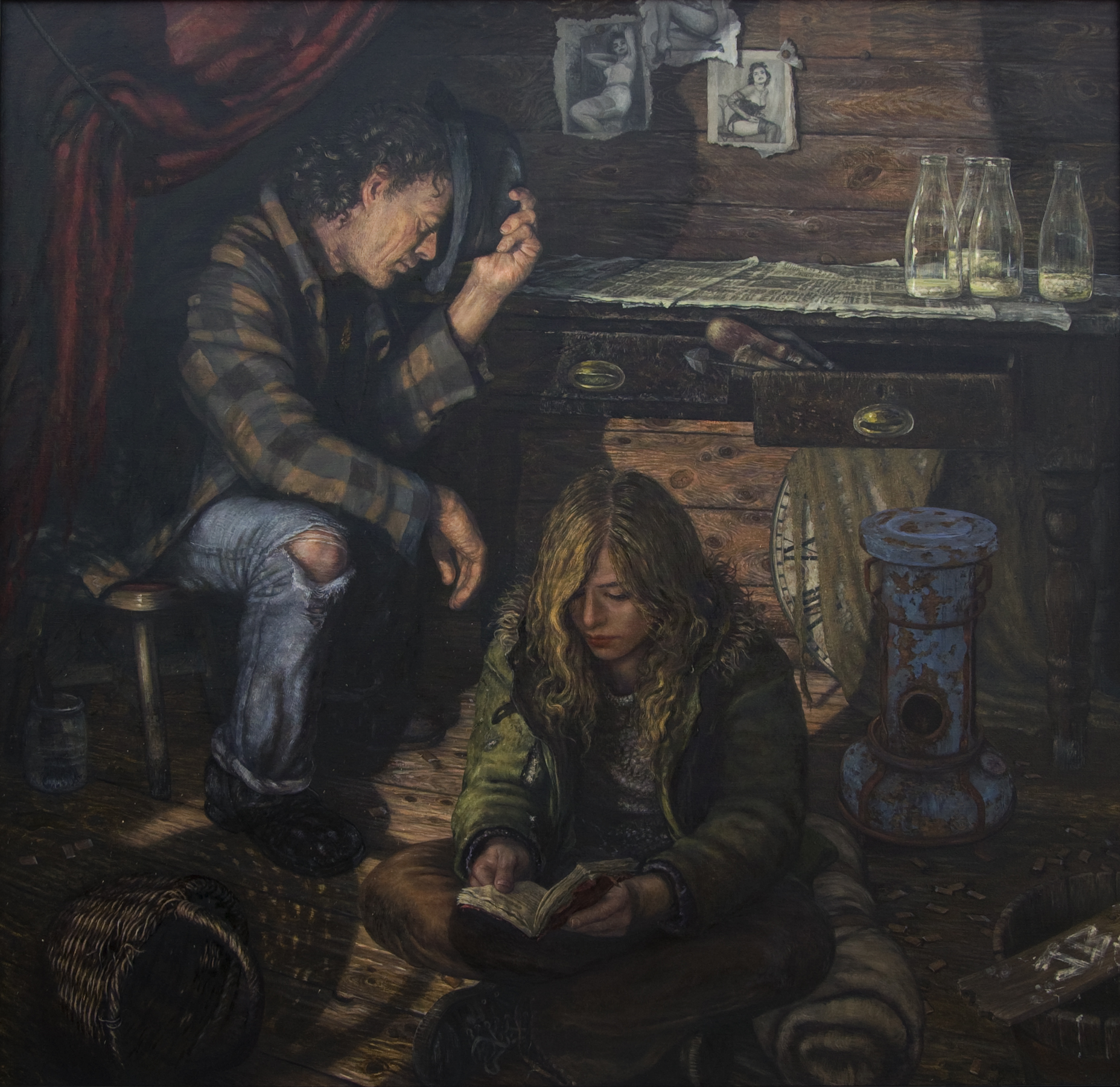
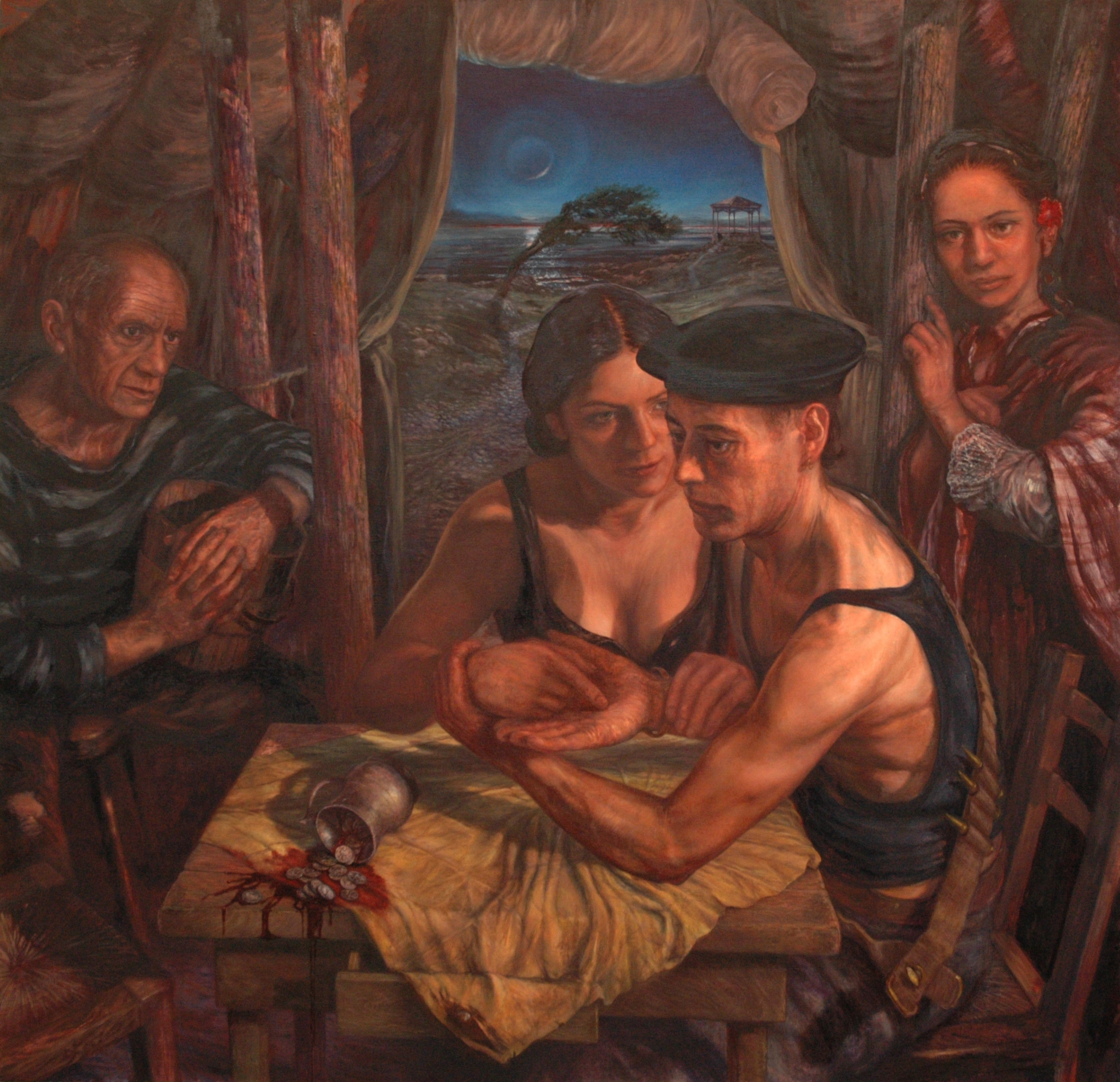
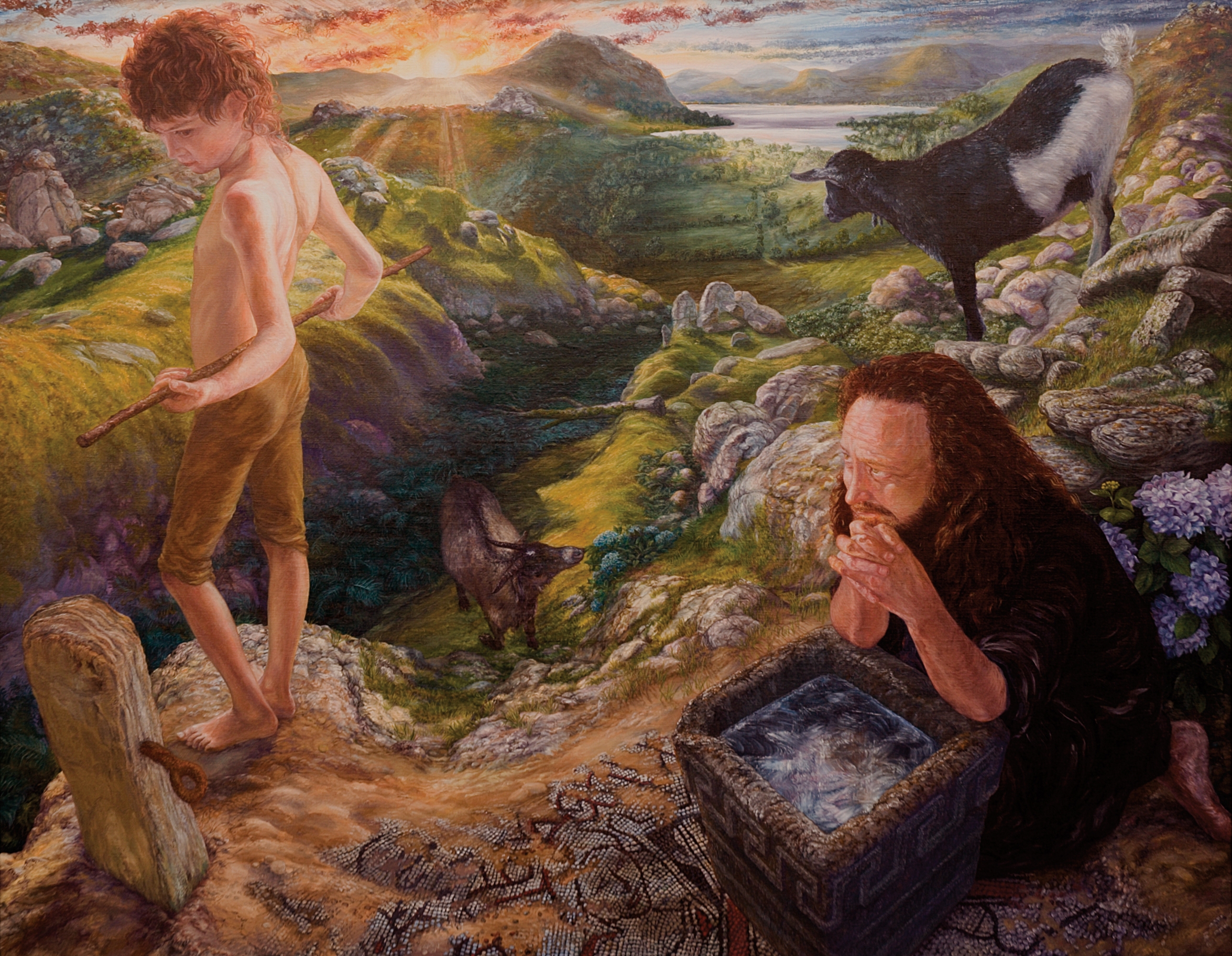
 I guess by now I have the luxury of looking back here, at a good proportion of my career arc. When I look over my paintings I see the exuberance and arrogance of youth slowly giving way to a more subtle ‘less is more’ approach. Hopefully the years of studio work have also paid off in a more refined technique and an ability to spot a major flaw. There’s no denying that with mature years come limitations; eyesight is not as super sharp as it once was and there’s a suspicion that sometimes you’re repeating yourself.
That would be a shame, as I’m proud of some of the images I’ve concocted and the themes I’ve tried to illustrate, so I try and avoid diluting the body of work amassed over almost 40 years.
Whilst what I call the major works are slower arriving these latter years, the sketchbooks and journals are as busy as ever and I’m continually rehearsing new themes, ideas and connections and new ways of communicating them visually. Typically, I will work through an idea for two or three years in the sketchbooks; this means a sequence of anything from ten to twenty quite polished A3 drawings as well as larger drafts. Quite often these chapters, albeit well developed, are set aside as new ideas come along and realistically some won’t ever come to realization. This is a pity as there is some good work there and some of the drawings, though fragmentary, have a charm and vivacity of their own. To save them from extinction it is my intention to publish some of these sketchbook ‘ideas in progress’, here and on my blog…watch this space ☺
If it’s not fresh and challenging every time, you’re not doing it right!
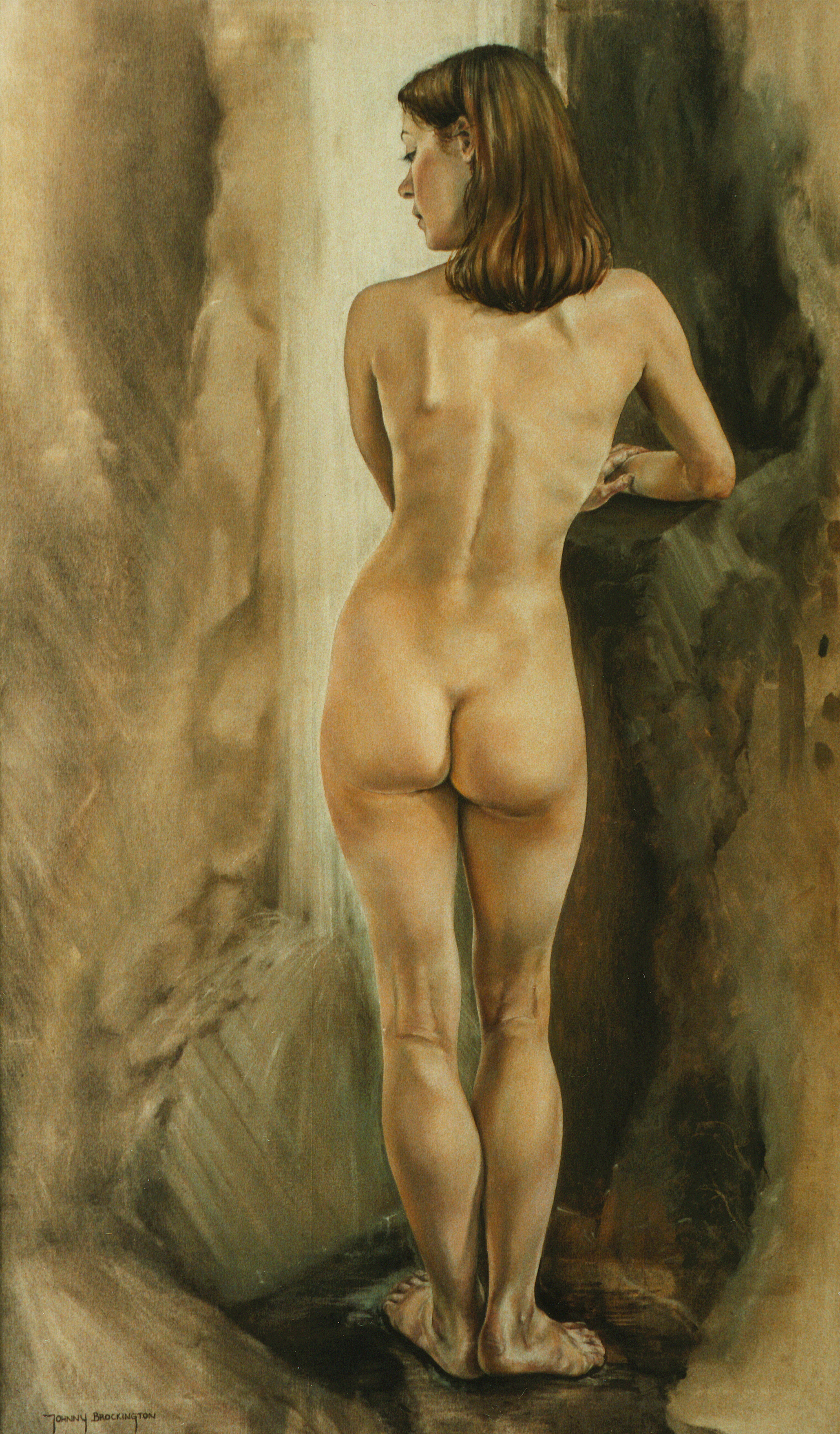
 The other mainstay of mine and any figurative artist’s career is figure drawing and painting from the live model. The confrontation between artist and model never fails to bring both inspiration and a continual honing of technique. If it’s not fresh and challenging every time, you’re not doing it right!
Again, these working drawings from life are more often than not consigned to the drawer, so to give them their moment in the sun I will also seek to publish some of these more regularly.
Finally, a lot of people have asked me about my painting ‘method’ and since showing is easier than telling, I will be featuring some chronological photo sequences showing the creation of some of my paintings.
John Brockington 2018